
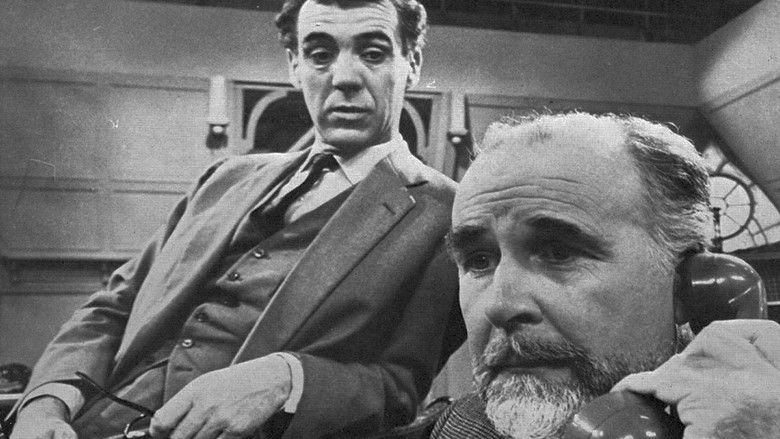
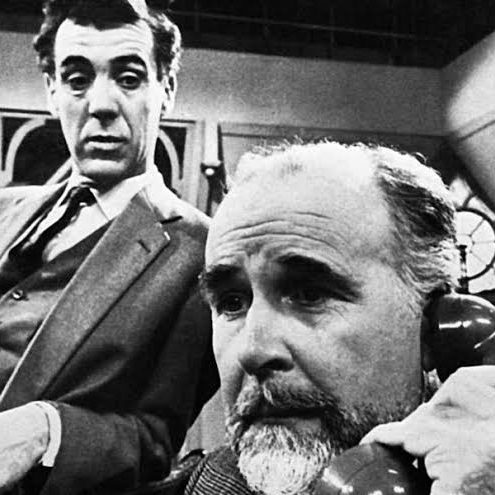
On the surface, we can say The Man in Room 17 is about two criminologists solving mysteries and uncovering crime from a secret room somewhere in Whitehall (London). Frequently extending the limits or interpretation of their brief, they are the epitome of faceless suits in grey buildings.
Nestled in the grey areas between the police and the Home Office, between intelligence services and the Crown, the purpose of Room 17 is to use whatever means at their disposal to solve problems that usually involves some kind of international intrigue or espionage.
The main characters during the first thirteen-part series are Edwin Oldenshaw and Ian Dimmock. They are the criminologists, the puppeteers that never leave their room, instead relying on a series of different agents on the scene to report developments. The existence of Room 17, is a closely guarded secret, just one branch of the British intelligence counteroffensive against ‘the enemies of democracy and freedom’, the Department for Special Research.
A most quirky aesthetic crept into television programmes in the mid 1960’s, popularised by The Avengers, in which the characters Steed and Mrs. Peel dealt with ever more outlandish villains in ever-more off-beat stories and the tongue-in-cheek style of The Saint, James Bond and Man in a Suitcase. The Man in Room 17 sometimes occupies the middle this ground. Often whimsical and surprisingly philosophical. The series forgoes the glamour of its aforementioned stable-mates in favour of Northern English grit.
The programme makers at Granada Television at the time (known among industry professionals as Granada’s “First Generation”), were a highly innovative and experimental group, keen to test the feasibility of using two separate units to make a series in half the time. By some dint of the inherent format, scenes featuring the main characters would take place on the same set, recorded separately from the ‘action’ scenes – handled by a different director. It was a novel idea. Like a film shoot made up of multiple units, a practice established in the world of motion pictures, but not on television. It was new and experimental and the really fascinating thing is, it actually works.
The series was the brainchild of a young writer called Robin Chapman. The characters he created for his first television opus are far removed from the gangs depicted in his follow-up saga, Big Breadwinner Hog.
Occupying the secret room of the title is Edwin Oldenshaw, an Oxbridge type with an enquiring mind, a philosophical bent and quite the raconteur. Ian Dimmock is younger than his colleague but has a wealth of experience of his own. Though, he is often at loggerheads with Oldenshaw, he’s also deferential to his colleague’s experience, power of recall and ability to focus his not inconsiderable intellect.
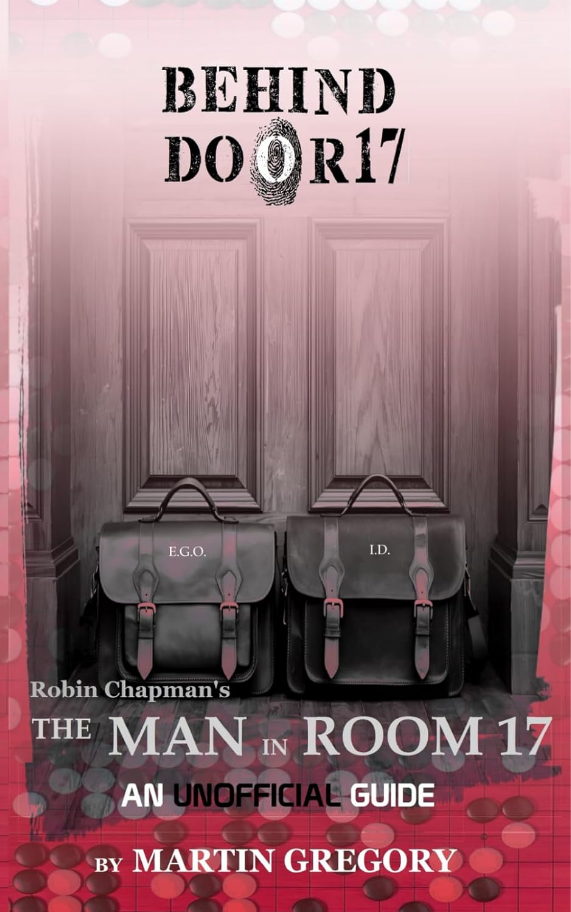
In my book ‘Behind Door 17’, I take a very detailed look at the thirteen episodes of the first series, examining the characters and reflecting on the things we learn about them as the series goes on. The book also contains essays on various aspect of the series, including the ‘deep state’ subtext, depicting a secret network of autonomous quasi-governmental departments.
Most episodes are often topical, filtering recent events of the mid 1960s into the drama (such as the episode ‘Out For a Duck’).
It is a series with a gentle, almost imperceptible unfolding narrative. Unusually for the time, the series does not ‘reset’ at the beginning of each new installment (although it takes four or five episodes for this to become apparent). The casualness with which conversations and happenings are referred back to is quite unarming. I am so used to shows from this era ignoring character development, preferring to snap everything back to where it was the previous week. It’s interesting to see a young writer challenging the norms of the era, and having the creative freedom to do it.
Robin Chapman enjoyed playing with his creations, Oldenshaw and Dimmock. Frequently sending them on an emotional or intellectual assault course. He tests their morality when called to protect state secrets, presenting situations and associates purely to see how his puppeteers react.
Read more about The Man in Room 17 in the unofficial guide book
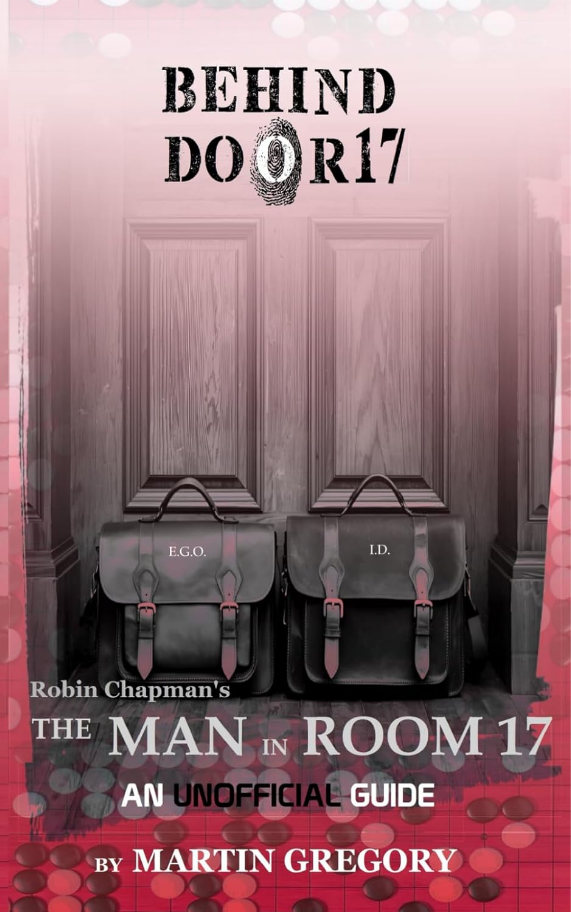
Somewhere in the depths of Whitehall, two shady puppeteers pull strings, manipulate events and defy their superiors – all from the confines of their cosy office.
For thirteen weeks in 1965, television audiences not tempted outside by the summer weather were beguiled by the charmingly elusive newcomer to Friday nights, The Man in Room 17.
Richard Vernon (A Hard Day’s Night, Goldfinger,) starred as the former code-breaker Edwin Oldenshaw alongside Michael Aldridge (Last of the Summer Wine, Charters and Caldicott), his intellectual but playful colleague, Ian Dimmock. Written by Robin Chapman (Big Breadwinner Hog, Boon), The Man in Room 17 was one of the most innovative programmes made by the ‘punk’ of UK broadcasting, Granada Television.
This newly researched guide contains fascinating new facts and analysis
- A critical essay on the first series of The Man in Room 17
- In-depth look at how the idea originated, developed and was received
- Potted biographies of every major contributor to the series
- Character analysis for principal characters Oldenshaw and Dimmock
- A chapter for each of the series’ 13 episodes with dedicated sections revealing new facts and insights and fun sections covering the period technology used in the series, the mythology surrounding Room 17 and more. Each chapter is wrapped up with a short review of the episode
Behind Door 17 gives you everything you wanted to know and more besides. Uncover the secrets and go behind that grey door with the essential companion to the intelligent, witty and occasionally irreverent first series of The Man in Room 17
RETURN TO CLASSIC T.V. REVIEWS
HOME PAGE
YOU MAY ALSO LIKE

Reviews of classic and contemporary audiobooks
Copyright Martin Gregory 2026
Discover more from No_Script_For_Life
Subscribe to get the latest posts sent to your email.


