
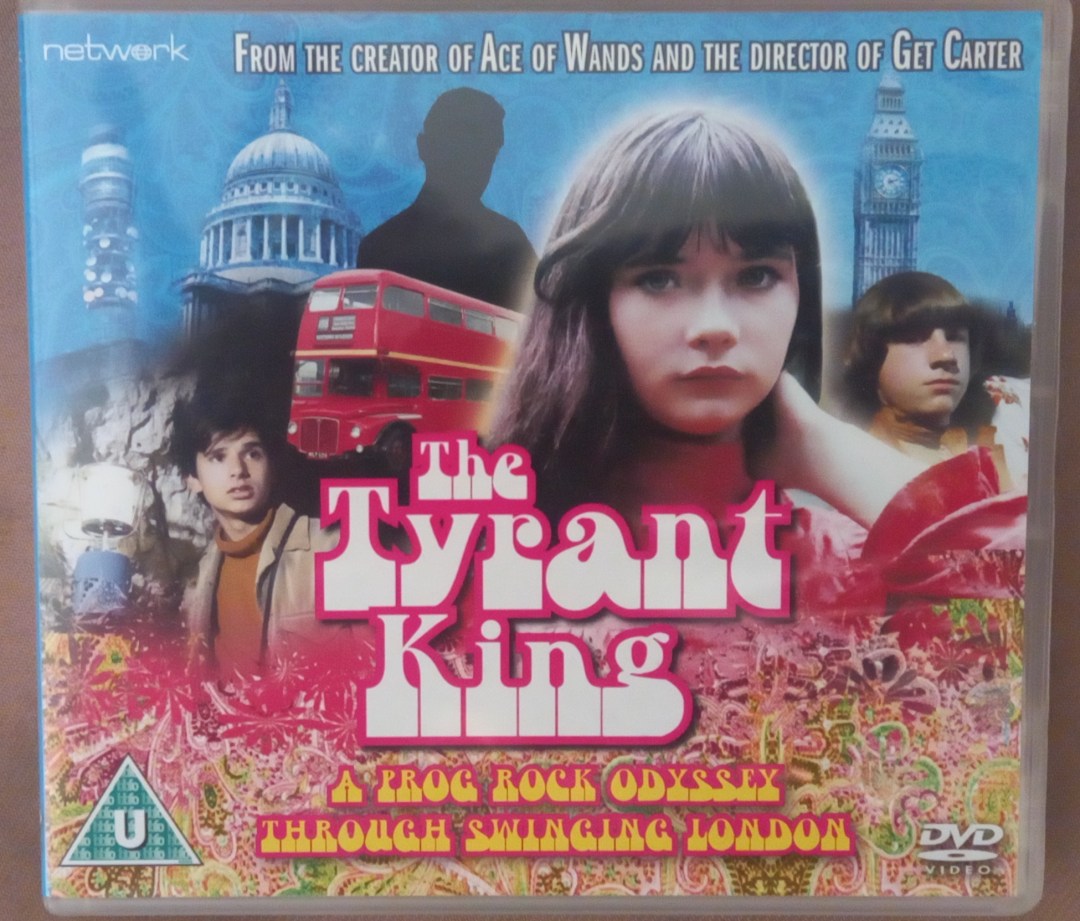
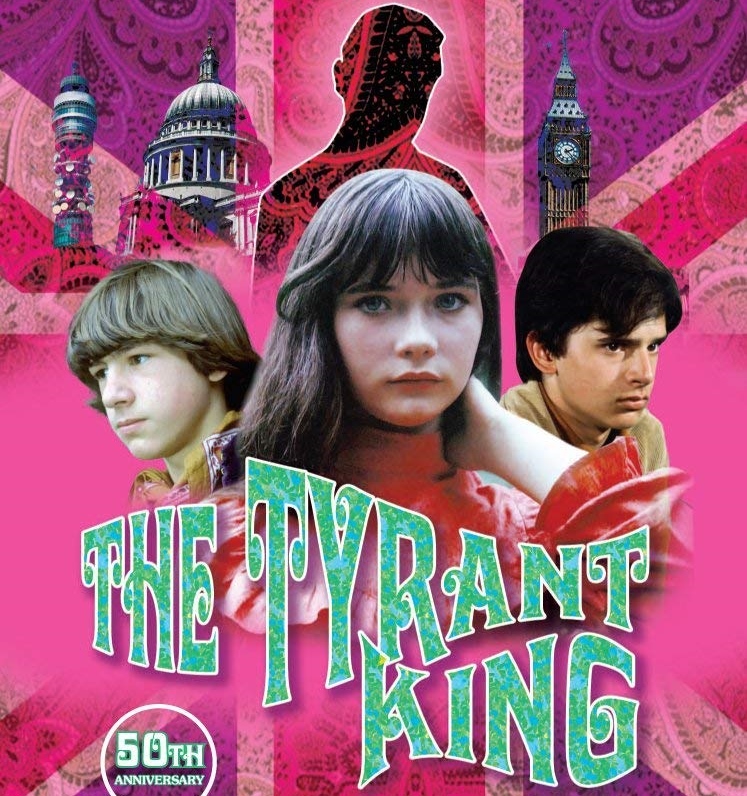
In 1968, Thames Television tested the feasibility of having another in-house production team, making programmes without the use of studios. The ‘second unit’ would be entirely on location and recorded entirely on Film. Eventually, this set-up became Euston Films, responsible for many films and television shows including The Sweeney and Minder. The Tyrant King was the test-piece for the new approach,.
Television screenwriter, Trevor Preston adapted the script from the original book by Aylmer Hall. Thames purchased the rights years before but were unsure how to capitalise on it.
The script required director Mike Hodges (Get Carter) to take his cast and crew to many locations, most of which were famous London landmarks such as Tower Bridge, Buckingham Palace, The Greenwich Meridian, the Imperial War Museum, to name a mere handful.
The story starts when one of the three leads, Peter tests a telescope by looking out of his friends’ bedroom window toward an old and delipidated house. Signs suggesting someone recently visited the abandoned dwelling attract the curious three friends. Entering the house, they overhear a man with a ‘posh’ accent talking on telephone about something that sounds decidedly dodgy. Illegal, even. When the suspicious individual rushes from the house, he drops a wallet, which the kids retrieve before giving chase. Following, they attempt to recall details of the conversation just heard.
By following these ‘clues’, the teenage detectives try to anticipate where these dodgy fellows may meet (which is where all the London landmarks come in). Early in their quest for the meaning and identity of ‘The Tyrant King’, the determined youths repeatedly see a man with a deep scar across his face. Is he following them, or is it the other way around? Everywhere they go, he’s either just arriving, just leaving or already waiting.
Later, there’s an accident with the half-remembered wallet where it gets ripped, revealing a secret pocket containing a folded up piece of paper. The series of elaborate drawings and, what looks like a map, provides the amateur sleuths with new clues to investigate, which precipitates more chasing around London while some of the best trip-out music of the era accompanies the action.
The first thing you notice is the plot; It’s paper thin. Peter, Charlotte and Bill (who all have pretty well-to-do parents, and explains how they fund their travel on busses, ferries and trains, not to mention admission to most of the attractions) put in a lot of detective work on the scantiest of evidence. Just a hunch that something bad is going to go down is what drives the first two episodes. Though there are some mildly exciting moments speckled throughout the six episodes, it is really the final instalment where things start to move along and reveals whether the kids really were right to follow their hunch to its conclusion.
Welsh actor Phillip Madoc is the baddie, ‘Scarface’, and is the main guest star of this production. It must have been a very enjoyable job for him. Not only is he on location throughout but, until we get to the sixth episode, he has less than twenty lines of dialogue! It also looks to have been a very sunny summer shoot, with three very capable young actors.
The three lead characters are played by actors from a juvenile drama school, including Candice Glendenning (here billed as ‘Candy’ Glendenning). Classic cult television fans will remember her as Rochelle the bond slave in Blake’s 7. Classic horror movie buffs will recognise her from the Tower of Death.
Perhaps the most interesting thing about The Tyrant King is the incidental music from the likes of Pink Floyd, Cream, The Moody Blues and The Nice, among others, including (briefly) the Rolling Stones (the full list with You Tube links can be found at the bottom of the page).
The music domimates most of this production. To me, it seemed incredibly boisterous. Tunes from the likes of The Nice start up whenever the characters travel somewhere, making it seem like the streets of central London are filled with the sounds of prog-rock.
Having got used to the music by the time the second episode started, slowly, until mid-way through the third, I found I really liked it. When I resumed watching a few days later I was on the fourth episode and already played some of the songs on You Tube. By the fifth episode, a really impossible to shift earworm had set in. I was now looking forward to the inevitable scenes of chasing around and traveling and the music kicking in. The sixth episode features less music overall because the plot resolution takes priority.
I’m a big fan of rock and the various sub-genres, and I’m not adverse to a little psychedelic / experimental / prog rock. The songs featured in The Tyrant King are pretty decent examples of those genres. ith a thin plot and mostly unknown actors in every role, the music plays a very heavy part in the appeal of this programme. It’s as if Mike Hodges sought to use music that would help distract the viewer from the familiar locations, the unknown actors and the thin plot. So it’s all part of the plan really, and perfectly valid. And it makes sense when you consider what an important part the music, particularly the opening theme, makes to the atmosphere of Get Carter.
Considering how many productions have original music dubbed with something generic to save royalty fees, spoiled, or placed on hold indefinitely because permission to use music hasn’t been granted by the original artists, it is – from the perspective of preservation, if nothing else – absolutely splendid that The Tyrant King has arrived on DVD completely in tact.
The Tyrant King was only shown once on television and in black and white. For the DVD, Network present a new transfer of the original film material, in order to present The Tyrant King in colour for the very first time. That’s kind of cool, isn’t it?
Produced with a lot of help from London Transport, this is evident throughout and receive an on-screen credit on all six episodes.
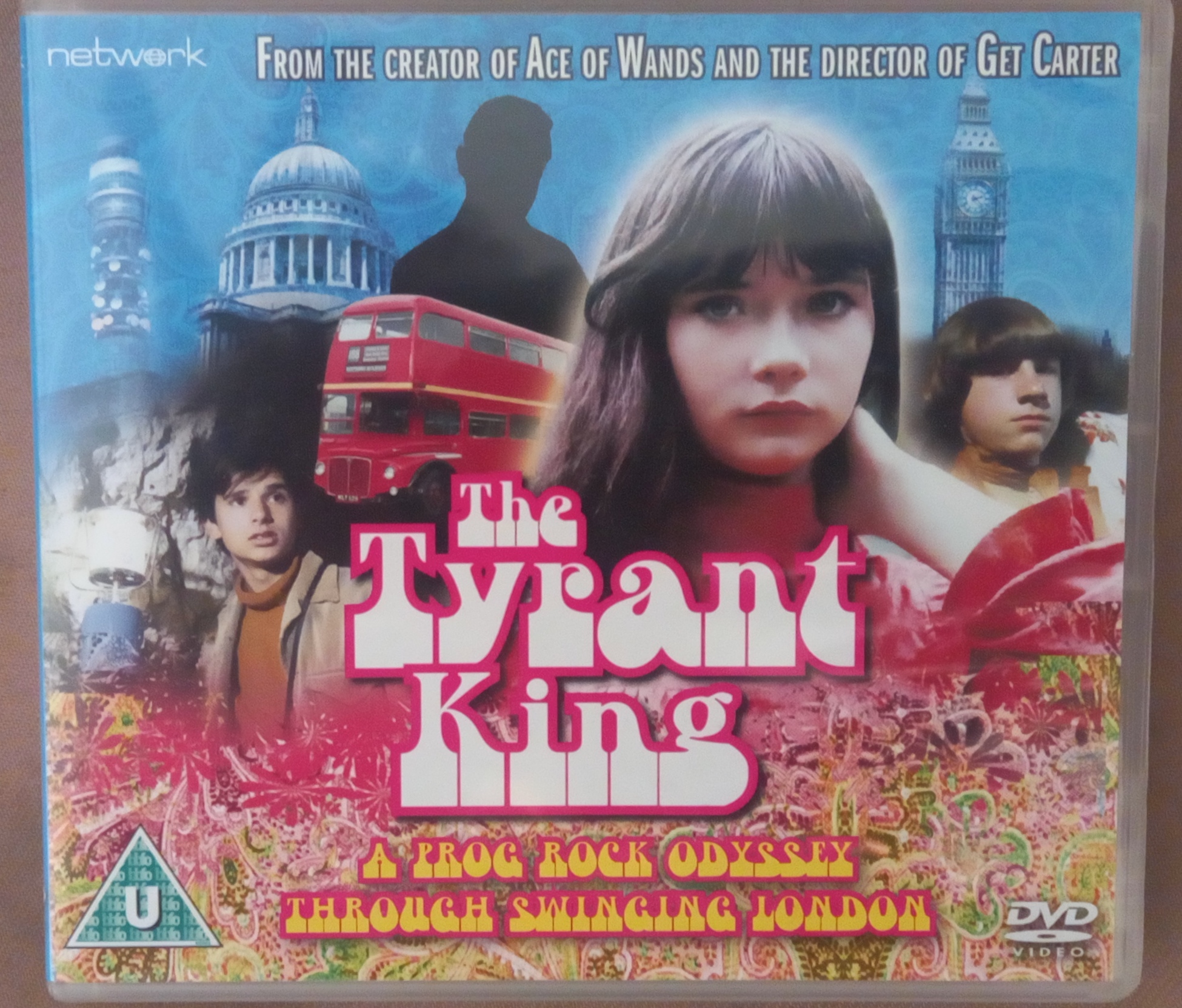
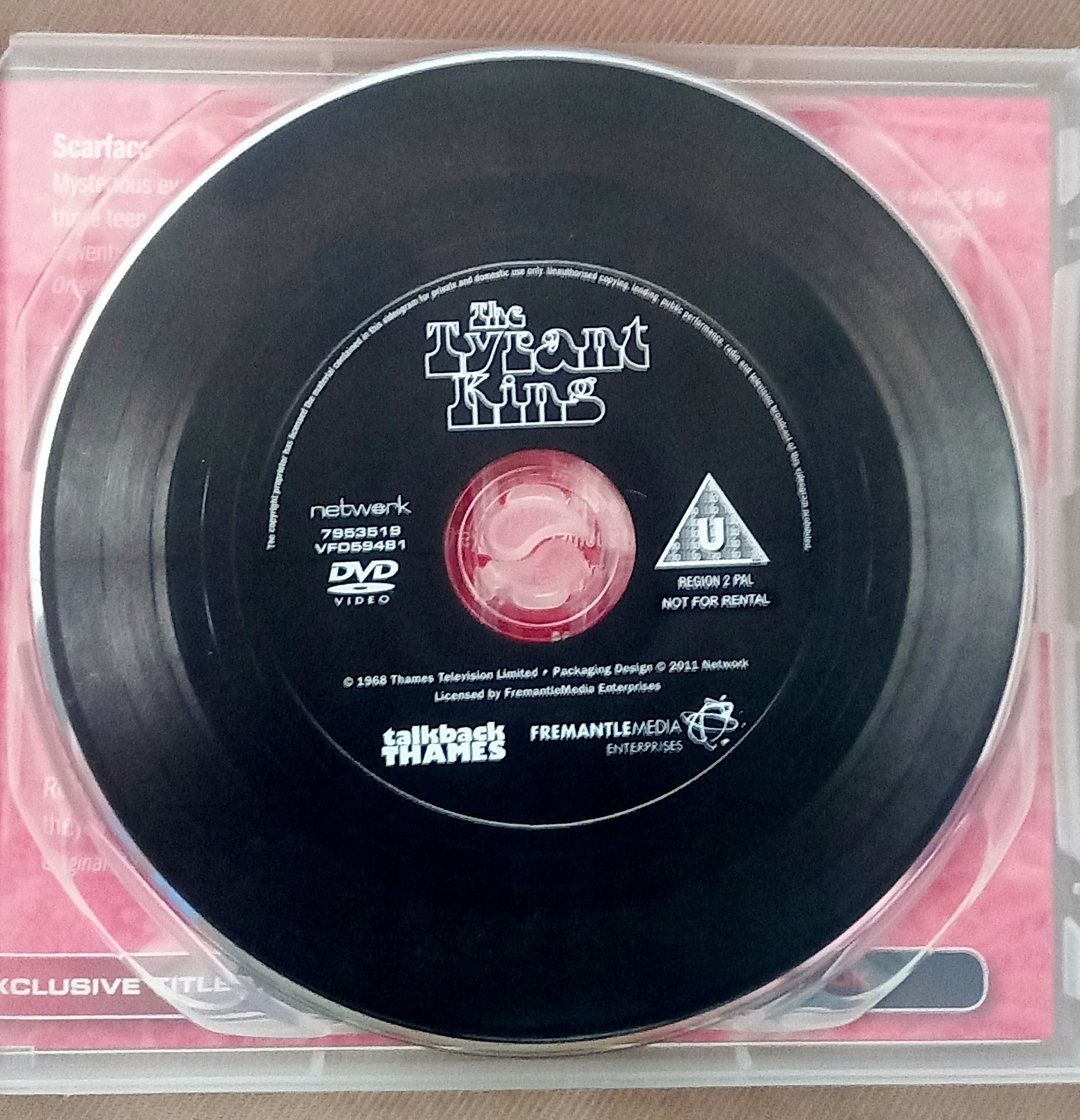
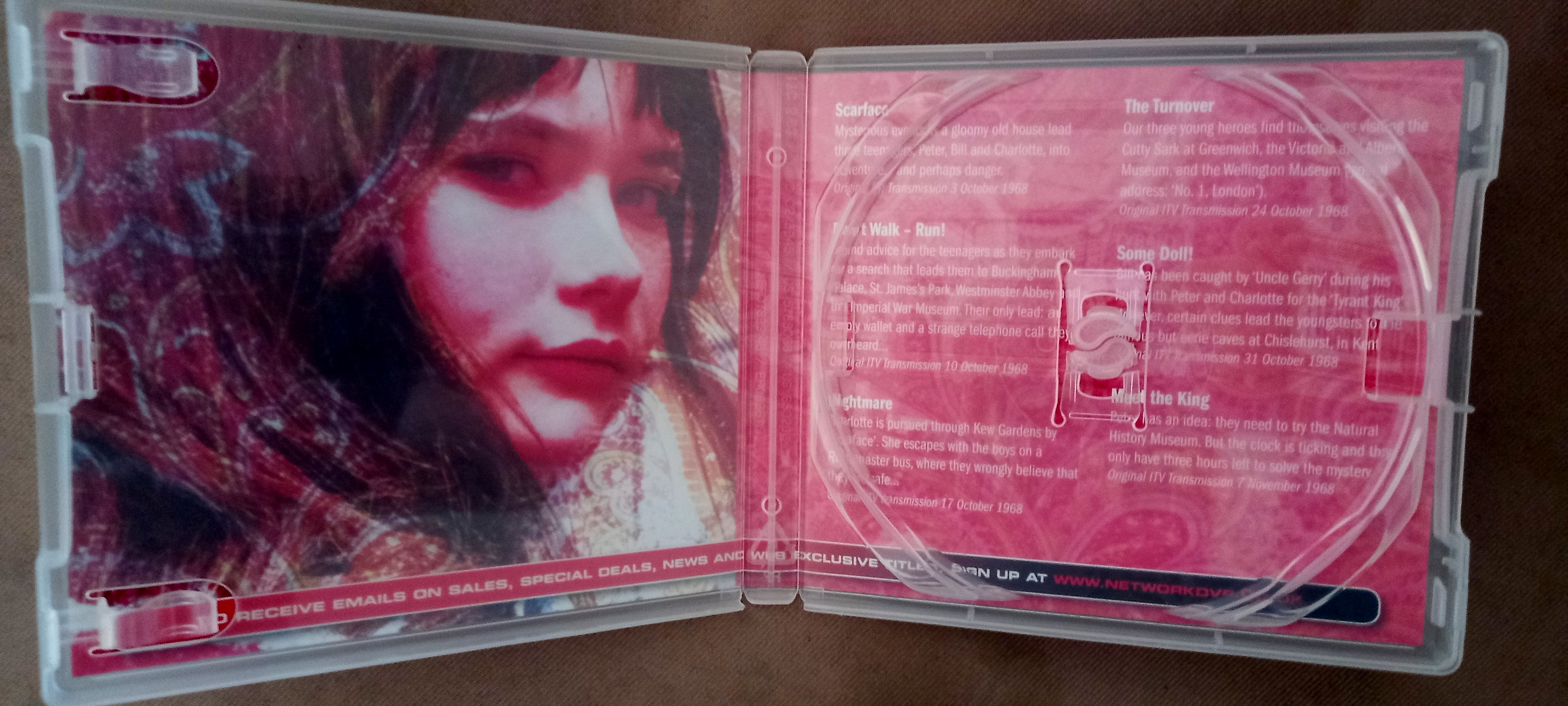
These run to 150 minutes in total, so it all fits comfortably on one disc. The version of The Tyrant King that I bought from eBay for £12, is in a smaller than standard DVD case. It’s more the size of a CD but in a clear plastic DVD-style case (see above). The actual disc inside is a nice touch, looking like a mini vinyl record, presumably a nod to the incidental music used throughout.
Inside is a stylized photo of Candice Glendenning and brief synopses of each of the six episodes. This release from Network did not come with viewing notes.
The plot is thin, and besides Madoc and Glendening, familiar locations are filled with unknown actors. If the music is not to your taste, if you have no interest in the production that foreshadowed Euston Films, there is just the sight of swinging 1960’s London in all its colourful splendor to enjoy.
This is quite a special release from Network and worth the effort. Though light on incident and menace, The Tyrant King offers something different, and holds a place in the history of British television and film.
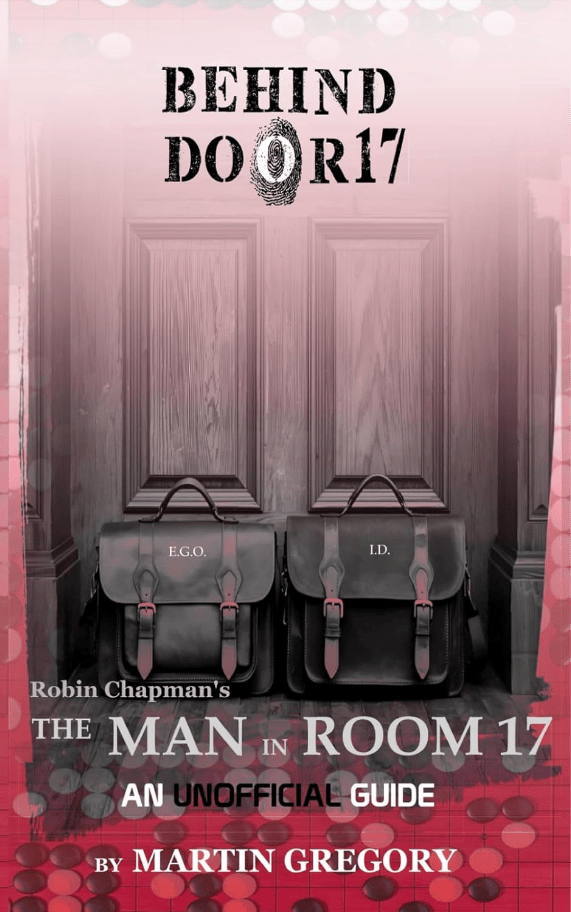
A newly-researched guide to the first series of Robin Chapman’s classic drama.
Available to buy now in multiple formats
The Music:
Pink Floyd – Astronomy Domine (You Tube link)
The Nice – The Thoughts of Emerlist Davjack (You Tube link)
The Moody Blues – Dr. Livingstone, I Presume (You Tube link)
The Nice – Tantalising Maggie (You Tube link)
Cream – As You Said (You Tube link)
Pink Floyd – A Saucerful of Secrets (You Tube link)
The Rolling Stones – She’s a Rainbow (You Tube link)
All links were working at time of publication
Visit the Archive for all past publications
copyright Martin Gregory 2026
Discover more from No_Script_For_Life
Subscribe to get the latest posts sent to your email.


