
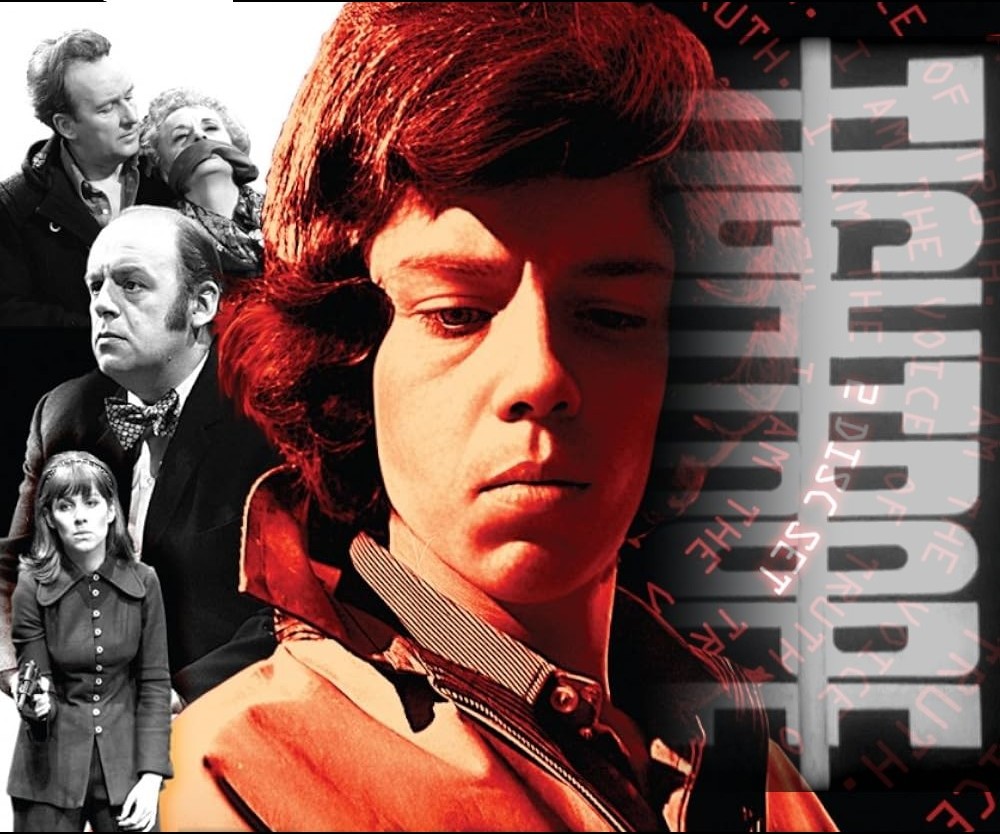
Tightrope was a tense Cold War thriller for younger viewers, written by former Doctor Who scriptwriter Victor Pemberton and stars Coronation Street’s John Savident, Timeslip’s Spencer Banks, and future BAFTA-winning producer and director David Munro. Intriguing and, at times, compelling, the series brilliantly captures the paranoia of the Cold War in a setting close to home.
It all starts when Martin Clifford (Banks) is knocked off his bicycle one morning and arrives late for class. Martin lives in the quiet English village of Redlow and is studying for his A-levels at the local comprehensive school when someone interrupts the “School for Television” broadcast during lessons with a message called “The Voice of Truth,” asking students to question authority.
The staff fear that school discipline is about to unravel when sixth-form pupils suspect one of them is behind “The Voice.” When the school’s headmaster is attacked and strangers are spotted on the school grounds, the mysteries begin to mount. Who was in the school aviary? What was the meaning of the equation Martin saw on the blackboard? And the biggest question of all: Who can he trust?
Commissioned by British Intelligence to help uncover enemy agents in the village, Martin is drawn into the operation by the enigmatic Forrester (Savident). He soon finds himself at the centre of a dangerous international espionage plot. Beneath the outwardly calm surface of Redlow lies an intricate network of spies and counterspies, focused on the nearby American Air Force base, which is soon to become the communications centre for top-secret NATO exercises.
Every time a lead develops, Martin is attacked or forced to flee. Everywhere he turns, he faces a potential enemy—including his own father and classmates. Desperately underprepared and constantly in the dark, Martin finds his life balanced precariously on a tightrope.
Created and written by Victor Pemberton, whose writing credits included a short stint as script editor on Doctor Who and his own six-part serial, Fury from the Deep. He later created Ace of Wands for television and wrote numerous serials and plays for BBC Radio, including the highly acclaimed science-fiction horror The Slide, which was also set in a place called Redlow.
Produced by Associated Television (ATV), Tightrope was first screened in thirteen colour episodes in 1972. Due to archiving practices at the time, only black-and-white film recordings made for overseas sales survive. Although the story is set in Lincolnshire, according to the Ordnance Survey map seen in Episode 8, location filming took place in Sarratt, Hertfordshire, England.
Clocking in at just over six hours, Pemberton maintains the suspense and drama well over the thirteen episodes, making use of a wide cast of characters, each of whom seems to conceal their true motivations. Marian Diamond is especially chilling as the icy Miss Walker, with her cold, penetrating stare and slow, upright movements. It’s also interesting to see Mike Grady (Citizen Smith, Last of the Summer Wine) and Sue Holderness (Only Fools and Horses, The Green, Green Grass) in early television roles. Both have fairly small parts but appear in multiple episodes apiece.
David Munro plays the school’s youngest teacher, Mr. Harvey, who represents another mystery for Martin to solve. Is he working on behalf of the acting headmaster, British Intelligence, or the enemy? In 1972, audiences would have known Munro best as Steve Morgan, a role he played in 51 of the 76 episodes of the Associated-Rediffusion series Orlando between 1966 and 1967. He later left acting to collaborate with Australian-born journalist John Pilger on a number of high-profile documentary films for British television.
Banks and Savident are the leads. Spencer Banks is instantly recognisable as Simon from Timeslip. Though it may be pleasing to imagine Martin as a temporally displaced Simon in disguise, the theory doesn’t hold together. Banks imbues Martin with a cynical weariness that belies his years. He trusts nobody—and knows he can trust nobody. Martin is propelled from one incident to the next, as quick on his feet as he is with his brain. He’s similar to Timeslip’s Simon in that he knows he’s the smartest kid around and is clever enough to realise that his intelligence makes him a target. But Banks successfully eliminates Simon’s occasional self-satisfaction while retaining the air of a reluctant hero.
John Savident clearly relished playing the lead adult role in this production. Literally a larger-than-life character in the real world, he seems to show great restraint as an actor. Forrester is the audience’s light in the gloom. Spencer Banks provides the fight-or-flight energy, teenage angst, and rebellious spirit that the plot demands, while Forrester is urbane, even charming.
Many of Savident’s scenes are with younger, less experienced actors, and here we see his generosity as a performer. He knows the audience’s eye can’t help but be drawn to his physical stature and wildly expressive face. We also see the restraint mentioned earlier: he constantly guards against excess and allows others to take centre stage.
Savident plays Forrester with caution and anarchy in equal measure. He is conniving when duping Martin and, at times, manipulative, persuading him to deliberately fail his A-levels while revealing details piecemeal and easing him into his clandestine world. He is, without question, the most interesting character in this drama.
Martin is a great foil for Forrester. Bright and wilful, he’s quick to make deductions but slow to put the pieces together—it takes him ages to figure out who Joana and her party are. Just when he thinks he knows the identity of the Voice, the clues lead to another knot in his ever-shortening tightrope.
This is a Cold War thriller for kids, and Pemberton clearly kept that in mind throughout the scripting process, inserting issues into the narrative to appeal to his young audience. Martin’s father is a widower who struggles to relate to his son, creating much tension and some animosity. Martin finds solace in the classroom and a kindred spirit in Spud, who shares his interest in photography. The sixth-former is also about to sit his A-level exams when he becomes involved with Forrester. He deliberately fails them in order to stay on at the school, where all the suspicious activity is taking place.
The idea that anyone outside the British broadcasting industry could access the equipment—in this case, a video recorder—to interrupt a schools television broadcast was rather novel in 1972. Though it is perhaps surprising and a little disappointing that the idea was not explored in greater depth, it’s interesting to note how this technological frisson, added for the benefit of contemporary viewers, is now lost on most modern-day audiences.
Mistrust of the establishment is a strong theme, no doubt reflecting the thoughts of many adolescent viewers. They were among the first generations to grow up in the mushroom-shaped shadow of the atom bomb, watching the same establishment vilify or mock the hippie movement, which sought peace through nuclear disarmament. In this context, the Voice of Truth speaks to a genuine fear: Why would you trust these warmongers? Schoolteachers represent state-sponsored proponents of neoliberal values, supported by arms of the state such as the police and a concealed web of spies. The schoolchildren of Redlow, living close to the US airbase, see—and no doubt hear—the realities of global tensions every day. By speaking to these fears and concerns for the future, those behind the Voice successfully plant the seeds of mistrust, as they might in any real school or public institution. For the demographic this series was aimed at, I imagine these issues would have been topical and as much of an attraction as the plot.
I won’t elaborate too much on the plot. The central mystery of who is behind the Voice remains unresolved as subplots appear and recede, with developments arriving at just the right time to keep the story from becoming repetitive.
I watched the DVD (more details below) over the course of six consecutive Friday evenings, at a rate of two episodes per week (three in the final week), but however you choose to watch this series, it’s sure to keep you on hooked on a tight rope.
The DVD
At this time of writing, Tightrope is still available new on Amazon and through other DVD retailers. Released by Network in 2011, with a different cover sleeve (see above) as a no-frills two-disc set. The inside cover gives a brief teaser for each episode there is a static menu, and the black and white transfer to DVD is very clean.
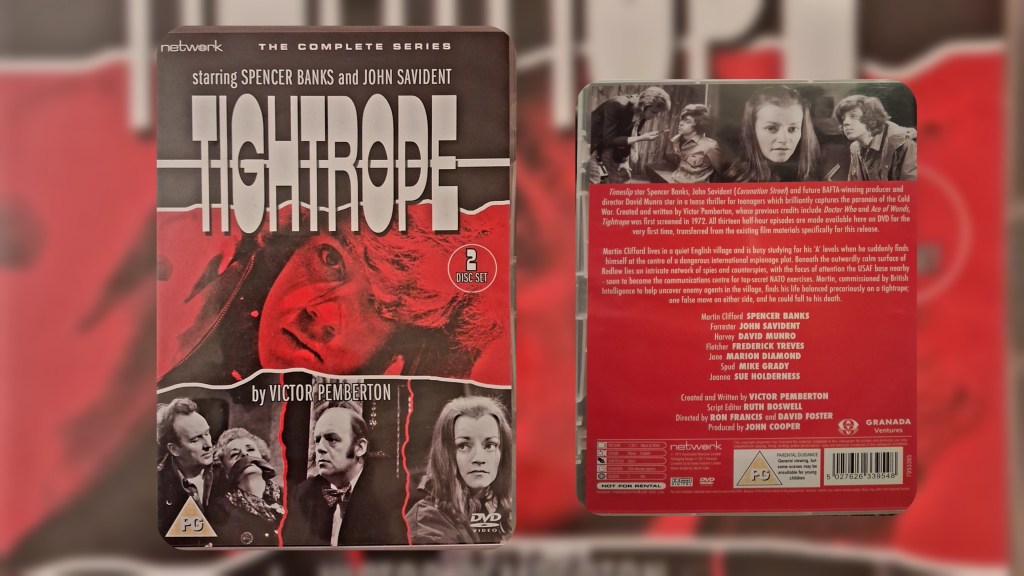
Cast: Martin Clifford – Spencer Banks / Forrester – John Savident / Mr Harvey – David Munro / Miss Walker – Marian Diamond / Mr Fletcher – Frederick Treves / Mr Clifford – George Waring / Mr Elliot – Michael Mellinger / Jessie Ruggles – Hazel Bainbridge / Ron Desmond – Michael Beint / Spud – Mike Grady / Joanna – Sue Holdernes / George Roubicek
Production: Writer – Victor Pemberton / Script editor – Ruth Boswell / Composer – Armando Sciascia / Directors – Ron Francis and David Foster / Producer – John Cooper
The Man in Room 17 Book
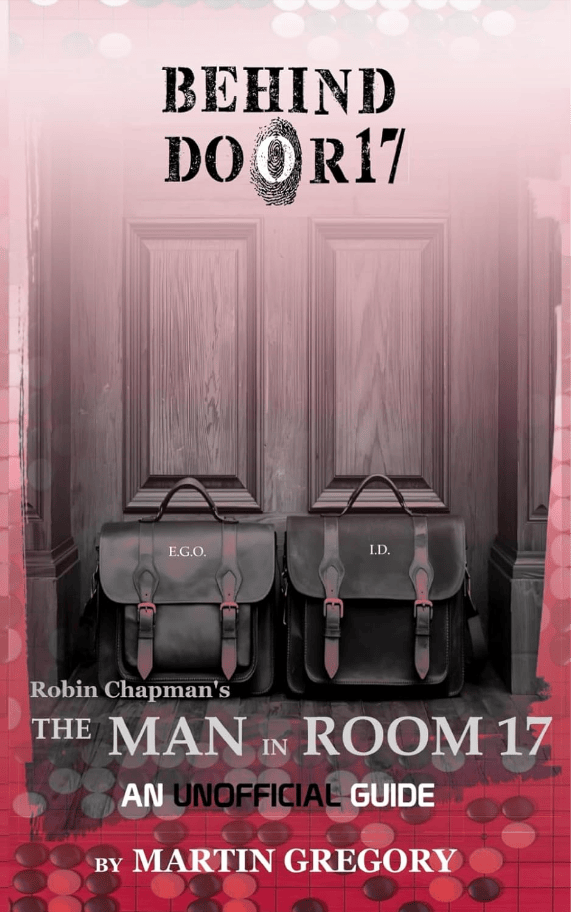
A newly-researched guide to the first series of Robin Chapman’s classic drama. Available to buy now in paperback and for Kindle.
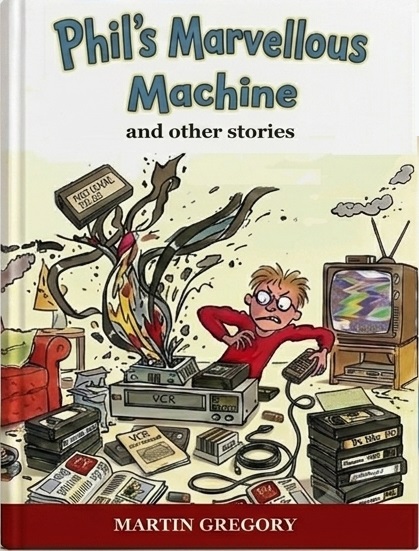
Phil’s childhood friend becomes an early owner of a brand-new video recorder—and everything changes from there.
This collection brings together ten different tales of comedy and mystery

Discover more from No_Script_For_Life
Subscribe to get the latest posts sent to your email.


Tightrope sound very intriguing. I don’t remember this program it depends what time of day it was on for me to have watched it. It definitely would have a peeled to me but I definitely have never seen it. I may look to see if I can watch in the future. Thank you for shaping.
LikeLike
Thanks for your comment. The DVD is still available I think.
LikeLike